


CaptiveCrunch: When the Network Is the Phish
Your security awareness program has spent years teaching people one lesson: be suspicious of the inbox. Check the sender. Hover the link. Do not open the attachment. That lesson is correct. It is also incomplete in a way that a...
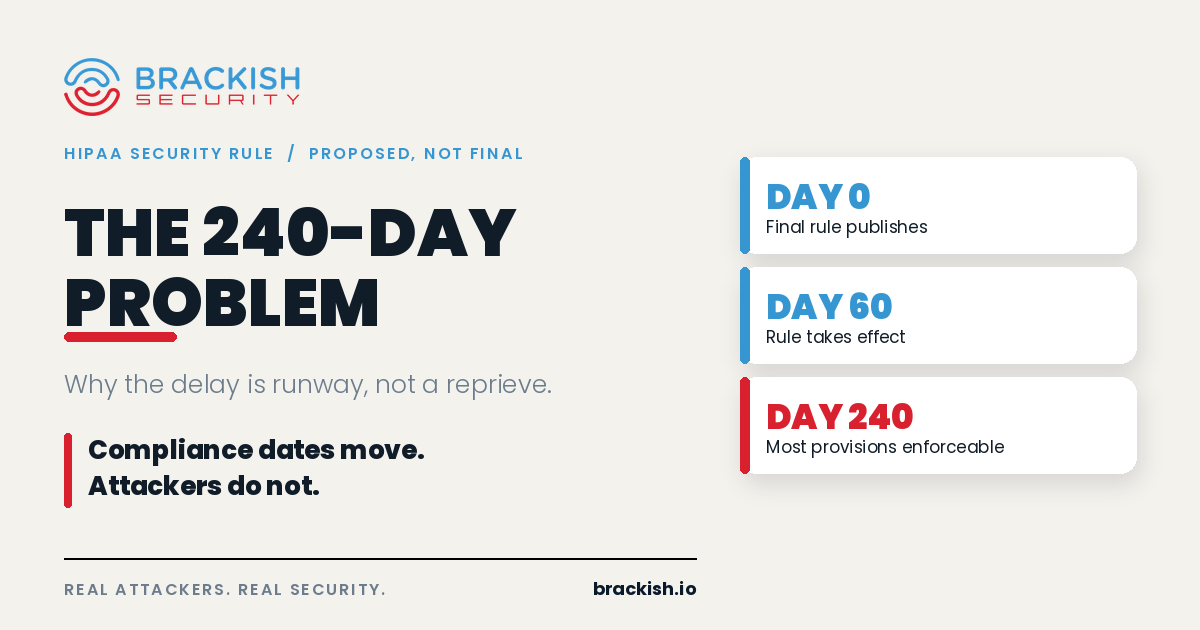
Healthcare Regulation Brief
The 240-Day Problem Why the HIPAA Security Rule delay is runway, not a reprieve. When word went around that the HIPAA Security Rule overhaul had slipped again, a lot of healthcare security leaders got the same message from the same...
One Phishing Test a Year Is a Compliance Artifact, Not a Security Control
Why cadence beats the annual checkbox. Most organizations run a phishing simulation once a year. It gets scheduled around the annual security awareness training, the results get screenshotted into a board deck, and the click rate gets compared to last...
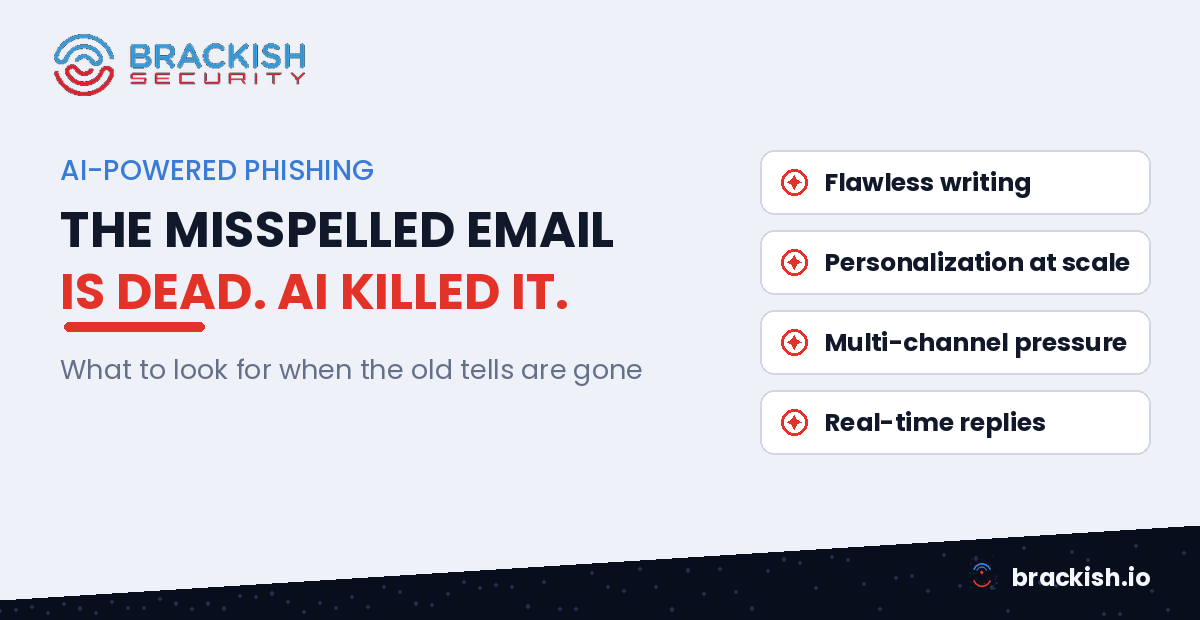
AI Phishing: What to Look For When the Old Tells Are Gone
For two decades, security awareness training taught the same lesson: look for bad grammar, generic greetings, and clumsy urgency. That lesson is now obsolete. Large language models write flawless, natural prose in any language and any corporate tone. The misspelled...
The First AI-Run Ransomware Attack Is Here. What It Actually Means.
In late June 2026, researchers at the cloud security firm Sysdig documented something the industry had been bracing for: the first known case of an AI agent running a ransomware attack from start to finish. They named it JadePuffer. The headlines were dramatic,...
Five Questions to Ask Before You Trust a Vendor With Your Data
Every vendor you bring on is a decision about trust. The moment you give a supplier a login, an integration, or a copy of your data, their security becomes part of yours. If they are careless, you inherit that carelessness,...
The Breach That Skips Your Wi-Fi: Why Physical Security Still Matters
Picture the most expensive, sophisticated security setup you can imagine. Firewalls, encryption, the works. Now picture someone walking right past all of it because you held the door open for them while they juggled a coffee and a laptop bag. That...
Can You Still Trust Your Own Eyes? A Plain Guide to Deepfakes
You get a video call from your boss. It is her face, her voice, her mannerisms. She needs an urgent payment sent before the end of the day. Everything looks right. The trouble is it might not be her at all. That is...

Shadow AI: The Hidden Security Risk Your Employees Are Already Creating
Your Employees Are Already Using AI. You Just Don’t Know Which One. There’s a conversation happening in security circles right now that sounds a lot like the one we had about shadow IT ten years ago. Back then, the problem...
Staying Safe on WiFi While You Travel This Summer
Staying Safe on WiFi While You Travel This Summer Summer travel means airports, hotels, rental cabins, and that cafe with the good iced coffee and free WiFi. Wherever you go, your phone is hunting for a network to join. The...